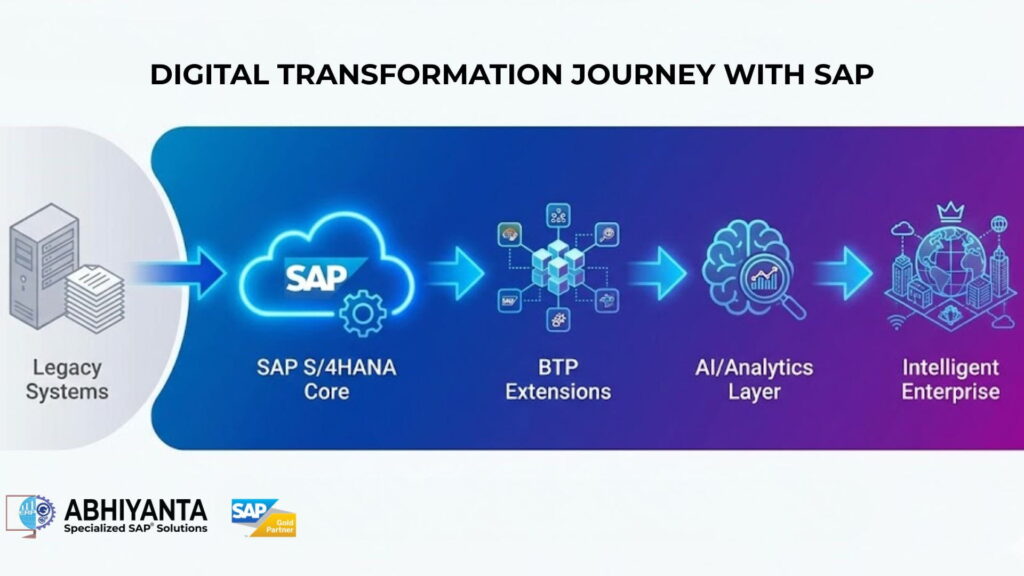
Digital transformation with SAP fundamentally redefines enterprise operations. Generally speaking, it means replacing fragmented legacy systems with integrated, real-time platforms leveraging AI, analytics, and automation. Specifically, within SAP’s ecosystem, this transformation delivers through the Intelligent Enterprise suite S4HANA as the digital core, BTP for extensions, and industry cloud solutions.
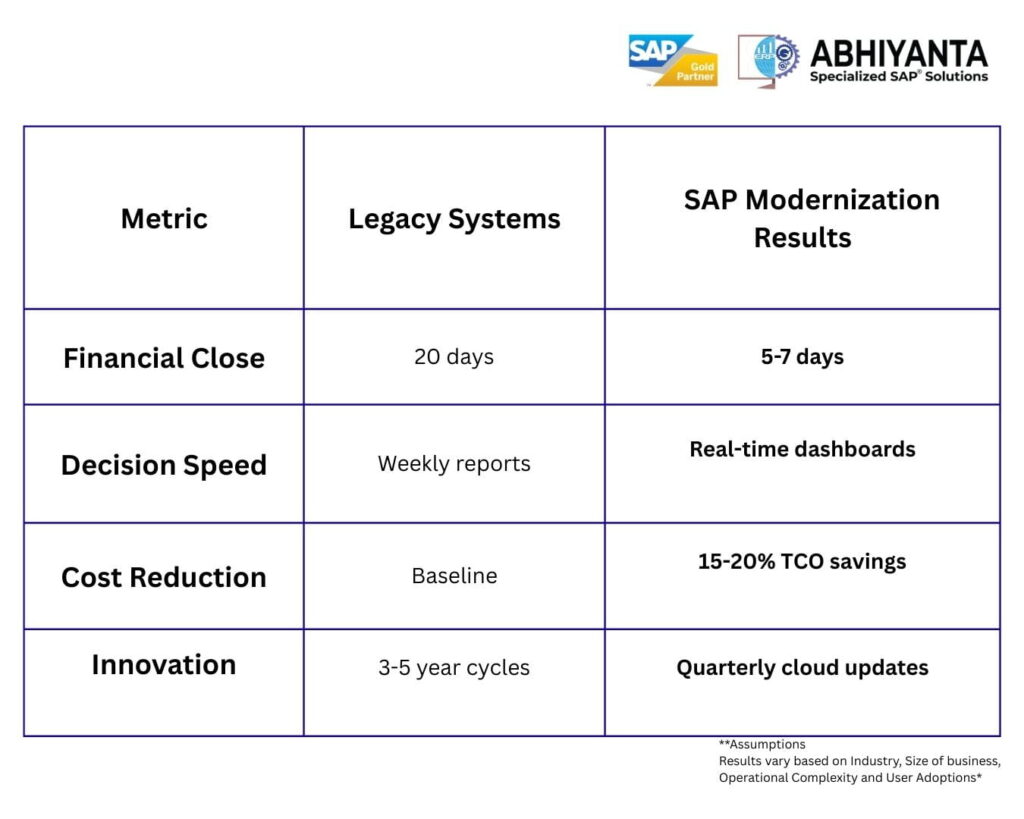
In practical terms, organizations convert batch-processing ERP into real-time decision engines. Financial closes drop from 20 days to 5 days. MRP runs completely in seconds. Supply chain disruptions appear instantly through control towers. These capabilities drive 20-30% operational improvements while building future-proof architecture.
This strategic shift moves companies from reactive operations to predictive intelligence across manufacturing, supply chain, finance, and customer experience.
Why SAP Modernization Drives Business Success
Manufacturing and enterprise operations face unprecedented pressure to modernize. Traditional ERP struggles with real-time insights, supply chain volatility, and AI-driven decisions.
Companies pursuing SAP-led modernization achieve measurable efficiency gains through proven technology stacks. Real-time operations replace monthly reporting cycles. Predictive capabilities preempt disruptions rather than reacting after they occur.
Key Takeaways for Leadership
SAP Platform Architecture Explained
Intelligent ERP Core
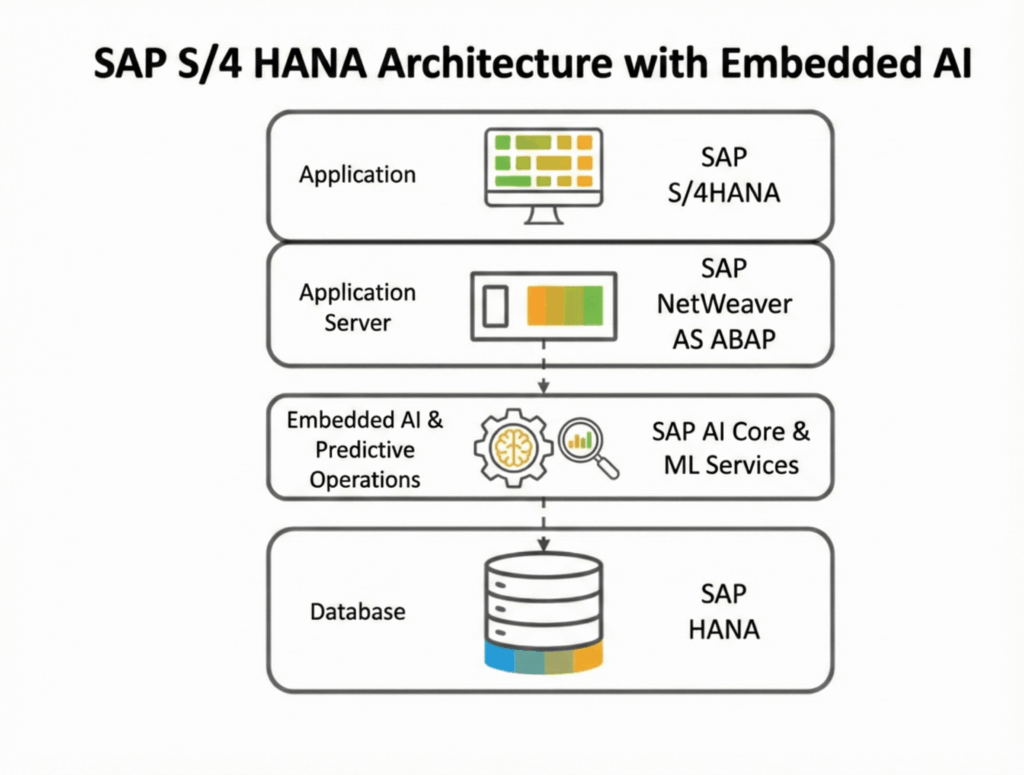
SAP S4HANA Cloud serves as the foundation for enterprise modernization. Unlike legacy ECC systems, S4HANA leverages in-memory computing for real-time processing. Financial closings are complete in under a week rather than 20 days. MRP calculations finish in seconds instead of overnight batch jobs.
Embedded AI automatically recommends optimal production schedules. Machine learning predicts equipment failures proactively. This shift from reactive to predictive operations transforms daily execution.
Business Technology Platform Extension Layer
SAP BTP enables clean-core extensions without modifying ERP functionality. Custom applications operate side by side rather than being embedded in core systems. Quarterly innovation updates are deployed seamlessly without disrupting customizations.
Low-code development tools empower business analysts to build workflow automations rapidly. IoT connectivity and third-party integrations extend platform capabilities. This architecture significantly reduces long-term maintenance costs
Industry Cloud Solutions
Vertical-specific solutions accelerate implementation timelines. Manufacturing gains Digital Manufacturing for shop floor visibility. Retail benefits from Customer Experience platforms for personalized engagement. Pre-configured processes shrink deployment from 18 months to 6-9 months.
Technologies Powering the Transformation
AI and Advanced Analytics
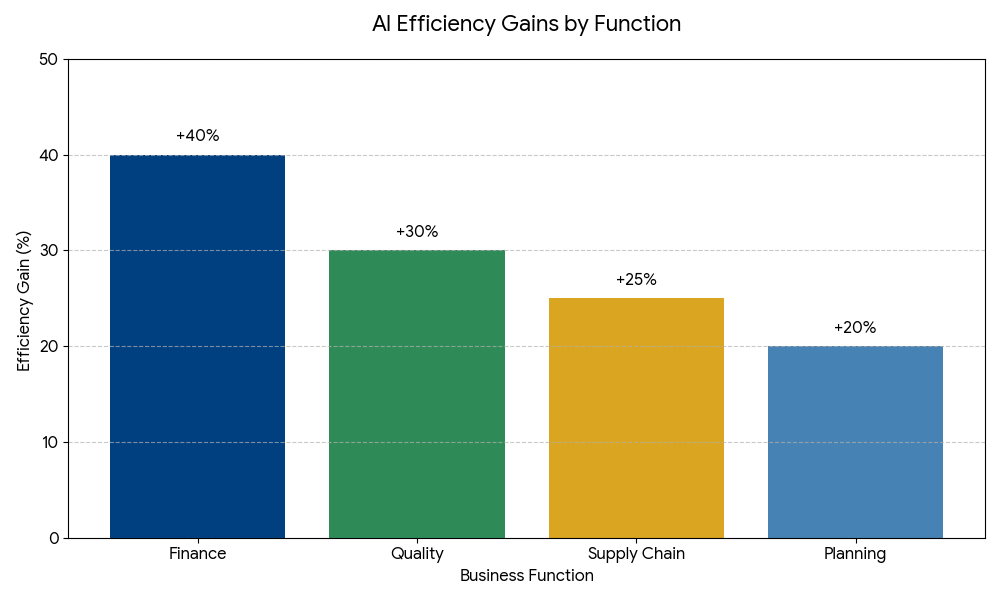
Artificial intelligence permeates SAP operations end-to-end. Demand sensing algorithms boost forecast accuracy by 15-20%. AI-powered quality inspection cuts defect rates by 30%. SAP Analytics Cloud unifies enterprise reporting into real-time executive dashboards.
Natural language processing enables conversational analytics. Executives query performance metrics using plain English rather than building complex reports. This democratizes data access across the organization.
Intelligent Automation
Robotic process automation handles repetitive tasks like invoice processing and master data maintenance. Finance teams reduce transaction processing time by 40%. Intelligent workflows automatically route approvals based on business rules.
Purchase orders, expense claims, and HR requests move faster through automated decision engines. Employees shift focus from data entry to strategic analysis and customer engagement.
Proven Implementation Roadmap
Phase 1: Strategic Assessment
Successful SAP projects begin with a comprehensive current-state evaluation. Teams document processes causing pain points or constraining growth. Capability mapping identifies quick wins versus long-term transformations.
Analytics dashboards deliver value within weeks. Core ERP migrations require 9-12 months of planning and execution.
Phase 2: Incremental Value Delivery
Phased deployments replace big-bang implementations. Core ERP establishes the operational foundation first. Analytics and planning layers add intelligence progressively. Industry solutions address specialized requirements last.
This methodology delivers continuous business value. User adoption improves because changes feel manageable rather than disruptive.
Phase 3: Organizational Alignment
Technology adoption requires cultural transformation. Training programs begin during design phases rather than post-go-live. Executive sponsorship demonstrates organizational commitment visibly.
Celebrating early successes builds momentum and overcomes resistance. Cross-functional governance ensures alignment between business priorities and technical execution.
Quantifiable Business Results
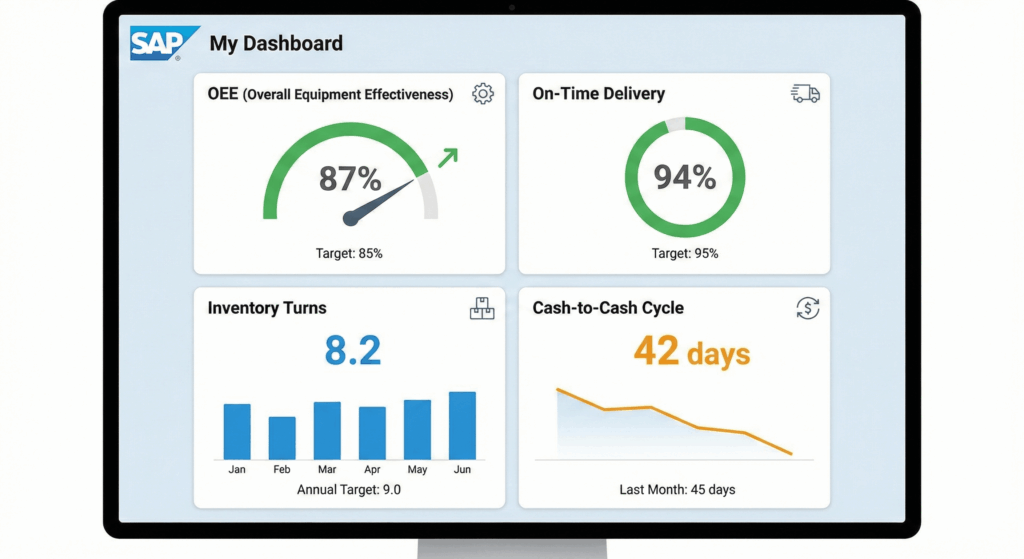
SAP modernization delivers clear operational metrics. Manufacturing planning cycles shrink 20-30%. Inventory turns improve 15-25% through enhanced visibility. Order promising accuracy reaches 95%+ levels.
Financial benefits compound over time. Operating costs decline 15-20% through automation efficiencies. Working capital requirements drop as inventory optimizes and receivables accelerate. Three-year ROI typically ranges 150-300%.
Industry-Specific Applications
Manufacturing Operations
SAP connects engineering, production, and supply chain systems seamlessly. PLM integrates with ERP for streamlined product development. MES connectivity provides real-time shop floor visibility. Overall equipment effectiveness (OEE) improves 15-20% through data-driven optimization.
Retail and Consumer Goods
Omnichannel platforms unify online and physical store inventory. Real-time availability across channels eliminates stockouts. Personalized marketing leverages unified customer data platforms to boost conversion rates significantly.
Financial Services
Universal Journal eliminates reconciliation between financial modules. Real-time profitability analysis shows margins by product, customer, and location instantly. Automated compliance controls reduce audit findings and regulatory risk.
Addressing Implementation Challenges
Complex legacy environments require selective data transition strategies. Valuable customizations are preserved while eliminating technical debt. SAP Activate methodology provides structured phase gates and decision frameworks.
Skills gaps are addressed through hybrid approaches—hire specialists for complex design, train existing teams systematically, and leverage partners temporarily. User-friendly Fiori interfaces reduce end-user learning curves dramatically.
Building Future-Ready Capabilities
Cloud delivery models enable quarterly innovation cycles automatically. New AI capabilities, sustainability reporting, and industry breakthroughs deploy without major upgrade projects. Product Footprint Management calculates carbon impact across global supply chains.
SAP’s forward roadmap includes quantum computing integration and advanced analytics evolution. Early adopters gain sustainable competitive advantages as these technologies mature.
Launching Your SAP Journey
Begin by documenting processes creating the most operational friction. Map current capabilities against SAP solution portfolio systematically. Engage business and IT stakeholders early to build consensus.
Proof-of-concept pilots demonstrate tangible value quickly. These initiatives build organizational confidence before broader rollouts. Experienced implementation partners with industry expertise accelerate time-to-value significantly.
Ready to modernize your operations? Abhiyanta International Solutions delivers comprehensive SAP transformation services—from strategic assessment through implementation to continuous optimization. Begin your journey →